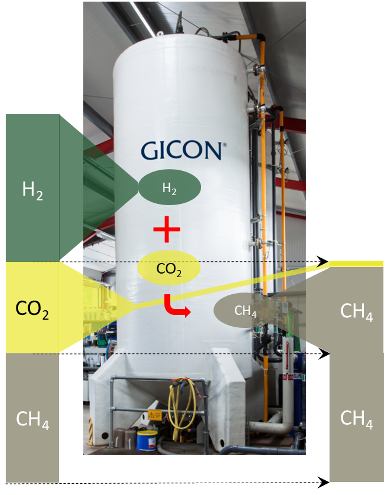
Biological methanisation in the GICON trickle bed process – an add-on for sector coupling
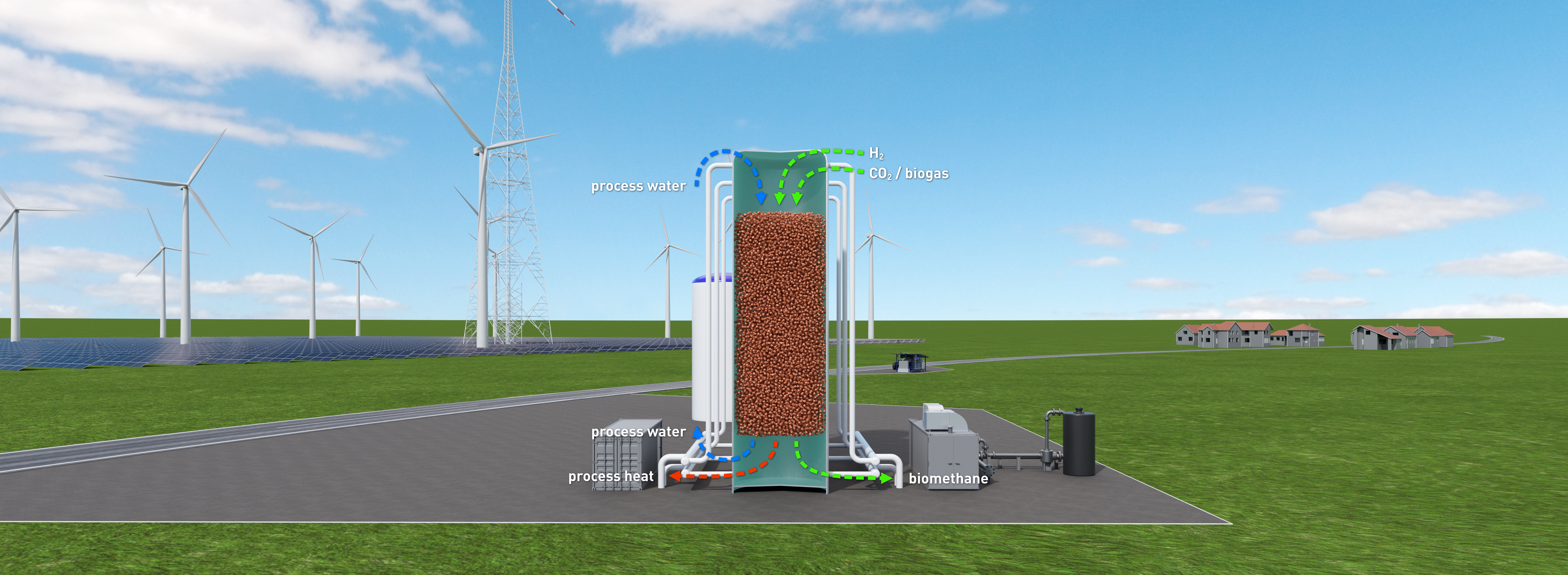
A typical application scenario is coupling to a biogas plant. By using biogas with a CO2 concentration of approx. 50 vol-% and adding hydrogen, the methane supply can be almost doubled. Compared to hydrogen, the volume-related energy density is 3.3-4 times higher. After gas drying and compression, no further purification of the methane is required before feeding it into the natural gas grid. The use of methane as a regenerative fuel (CNG/LNG) also offers an advantageous alternative to diesel in the non-electrified sector (heavy goods vehicles, tractors, buses). The energy efficiency is 73 percent. In addition, the heat can be utilised so that the efficiency can be increased.
The GICON trickle bed process is completely transparent:
| Methane concentration | > 95% CH4 |
| Methane formation rate (when using raw biogas) |
7 Nm³CH4/(m³R·d) |
| Temperature level | 65°C hyperthermophil |
| pH value | 7-8,5 |
| Heat release (reaction and condensation) |
21 kWh/(m³R·d) 3,137 kWh/Nm³(CH4,PtX |
| Total internal energy demand | 0,06-0,12 kWhel/Nm³CH4),PtX |
| Efficiency (with own energy requirement) | 73 % |
| Efficiency (with own energy requirement, incl. 50% heat utilisation) |
84 % |